
Gold Essentials

The comprehensive technical archive for the tangible asset. This section covers the spectrum of gold ownership: from Bullion Specifications and technical standards to the valuation of Luxury Timepieces like Gold and jewelry. It is the collector’s and investor’s manual for physical assets.

A visual concept depicting the simultaneous rise of gold and oil amid geopolitical tensions and their impact on global markets

Why Gold and Oil Rose Together on March 26, 2026… And Why This Relationship May Reverse Later

Because oil measures fear of supply disruption, while gold measures fear of monetary instability — but the relationship between them doesn’t remain constant When major crises erupt, watching gold and oil rise simultaneously might seem contradictory at first glance. However, what occurred on March 26, 2026, wasn’t a historical anomaly — it was a clear […]
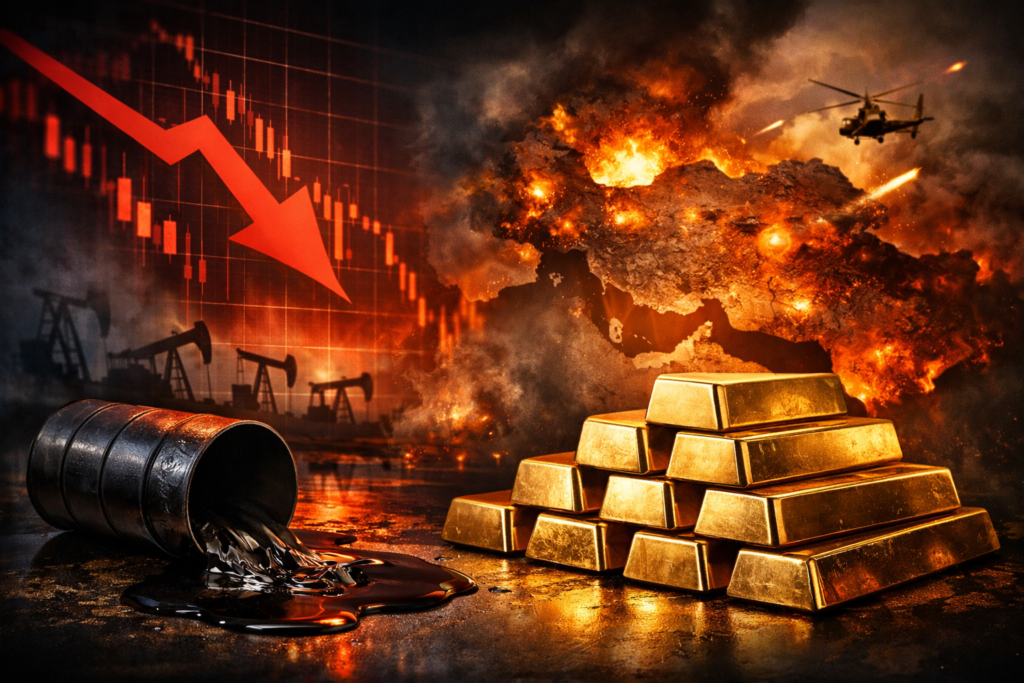
gold bars rising amid falling oil prices and geopolitical tensions visual concept

How Gold Benefited from Easing Inflation Fears on March 25, 2026 — While Geopolitical Tensions Remained

Gold doesn’t always rise when fear peaks. Sometimes, it rises when inflation calms down — and fear simply stays. That’s precisely what happened on March 25, 2026. The yellow metal staged a notable rebound, not because geopolitical risks disappeared, but because the market began distinguishing between two fundamentally different types of fear. The Core Shift:

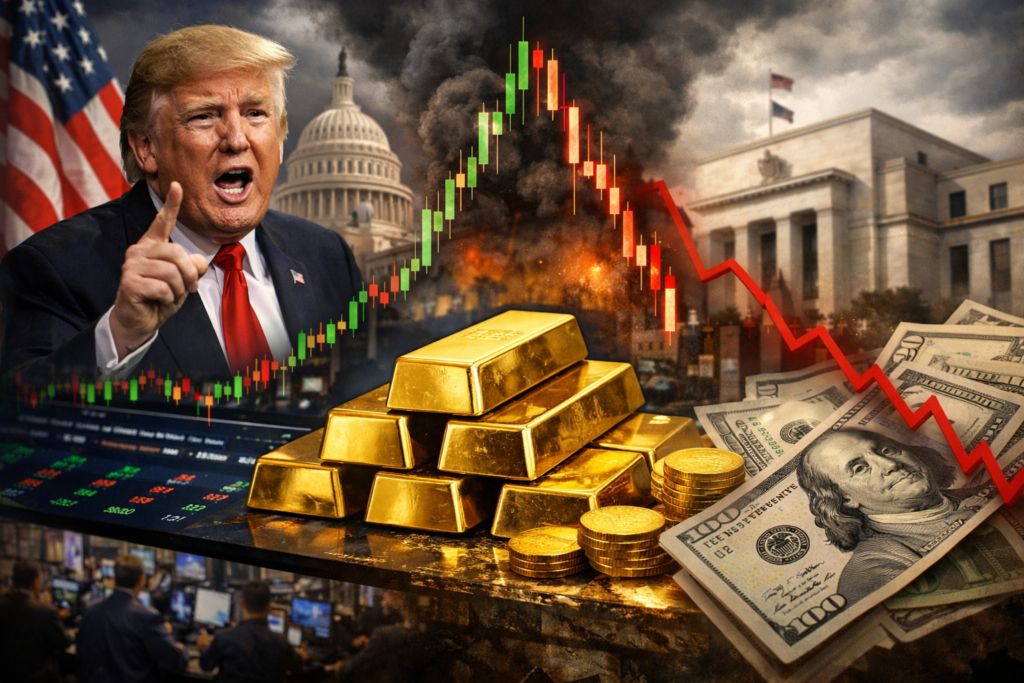
Composite image illustrating gold market volatility with the interplay of politics and liquidity featuring gold bars at the center with a fluctuating financial market background and elements representing the US dollar and political tension

Gold Volatility on March 23, 2026: When Politics and Liquidity Collide

How Trump’s Statements Triggered a Complex Market Reaction The gold market experienced significant turbulence during the March 23, 2026 session, following statements from former U.S. President Donald Trump that carried tones of political and economic escalation. These remarks revived concerns about potential trade tariffs and unconventional economic policies. While such developments typically support gold as

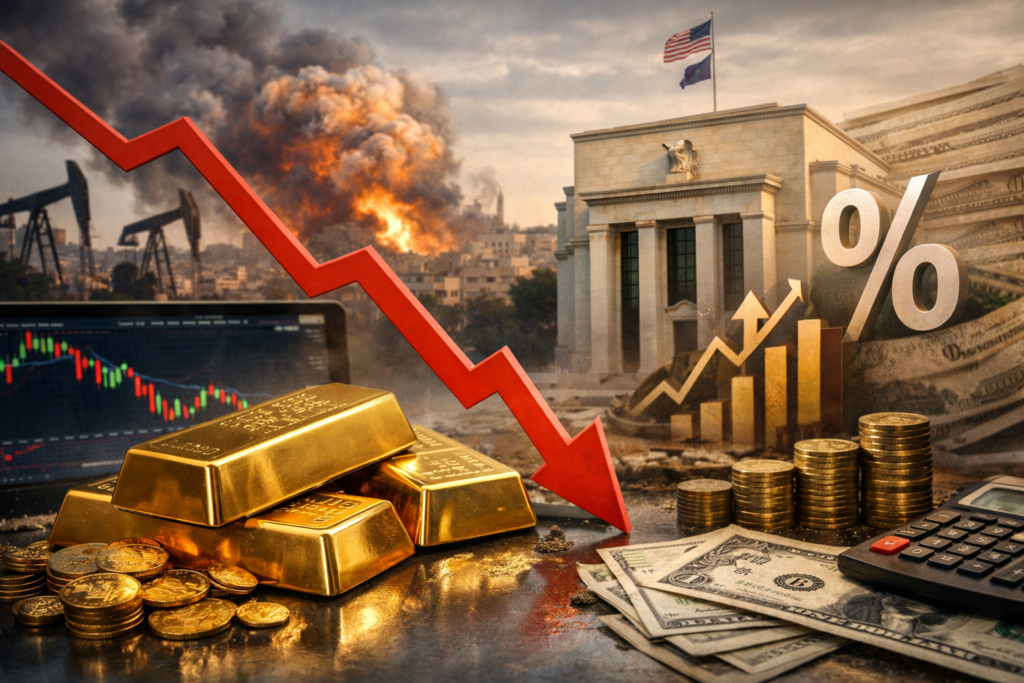
A realistic scene of shiny gold bars placed on a dark trading desk with screens showing falling prices and red chart lines while cold lighting reflects a tense financial atmosphere

Gold’s Retreat After the Fed Decision on March 18, 2026: When Interest Rates Overpowered War

The Moment Markets Recalibrated The decline in gold on March 18, 2026, despite ongoing conflict in the Middle East, wasn’t an anomaly. It was a strict reordering of market priorities. The instant the Federal Reserve released its decision, the question shifted. It was no longer about geopolitical risk magnitude. It became about the cost of money

A visual scene reflecting escalating tensions between the United States and Iran with a fire at an oil facility and a smoke-filled background while gold bars and an oil pump appear in the foreground signaling the war's impact on markets

Gold Retreats on March 16, 2026, Despite the U.S.-Iran War: How Oil and Fed Expectations Pressured Prices

A paradox unfolded in the gold market on Monday, March 16, 2026. Despite an ongoing military conflict between the United States and Iran—a scenario that traditionally sends investors rushing toward safe-haven assets—gold prices declined. The spot price fell to $4,993.42 per ounce, while U.S. futures dropped to $5,002.20, according to Reuters. This movement challenged conventional market wisdom. Understanding

Gold bars placed in front of a financial trading screen showing market charts and a rising US dollar index with a subtle Middle East map in the background representing geopolitical tensions affecting gold prices

Why Did Gold Decline Today Despite Geopolitical Tensions?

U.S. Inflation Data and Dollar Strength Reshape Interest Rate Expectations Gold prices retreated during recent trading sessions to hover around $3,150 per ounce, despite ongoing geopolitical tensions in the Middle East. This decline wasn’t driven by a single factor but followed the release of U.S. inflation data that reshaped monetary policy expectations for the Federal

Conceptual scene showing gold bars in a tense military environment on one side and oil infrastructure with a large explosion at sea on the other, illustrating how geopolitical tensions and wars affect gold and oil markets

Geopolitical Tensions vs. Actual War: How Each Shapes Gold and Oil Markets Differently

In the complex world of commodity markets, understanding the difference between geopolitical tension and actual warfare proves essential for anyone following precious metals. While both scenarios generate alarming headlines, market responses to each phase differ dramatically. This distinction matters because gold often surges during uncertainty phases, while energy markets may capture most attention when conflicts actually materialize. Recognizing these

Stacks of gold bars at Dubai airport cargo area beside a grounded aircraft and freight pallets while a soldier stands guard with smoke and burning ships visible in the background during regional tensions

Billions in Gold Stranded in Dubai: How Middle East Tensions Disrupted a Critical Global Trade Corridor

As military escalations intensified across the Middle East in recent days, the ripple effects extended far beyond energy markets and financial indices. One of the world’s most vital gold trade corridors has experienced significant disruption, leaving substantial quantities of precious metal temporarily stranded in storage facilities. According to economic reports and coverage from Reuters, flight

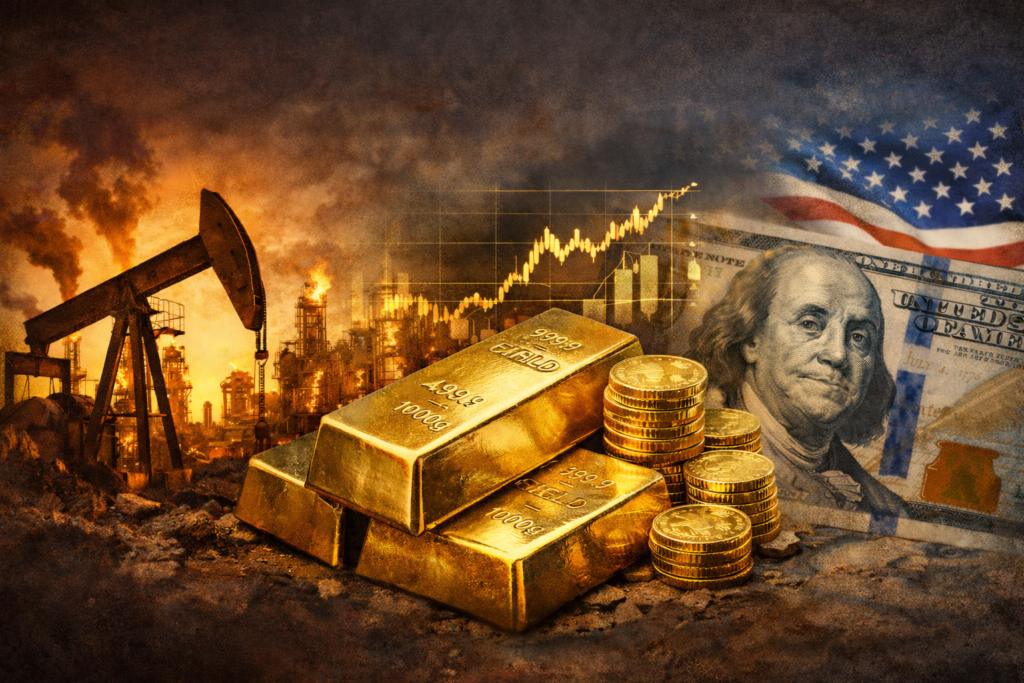
Composite scene featuring an oil pumpjack in a fiery industrial setting, stacked gold bars at the center, and U.S. dollar currency with the American flag in the background, symbolizing the interaction between energy markets, currencies, and gold

Oil, Dollar, and Inflation: How Middle East Conflict Is Repricing Gold Globally

Global markets are currently witnessing a clear repricing of risk as military tensions escalate in the Middle East. This has triggered a simultaneous surge across several key assets: crude oil, the U.S. dollar, and gold. During recent trading sessions, gold prices climbed to trade near historic levels following a wave of hedging purchases, while oil

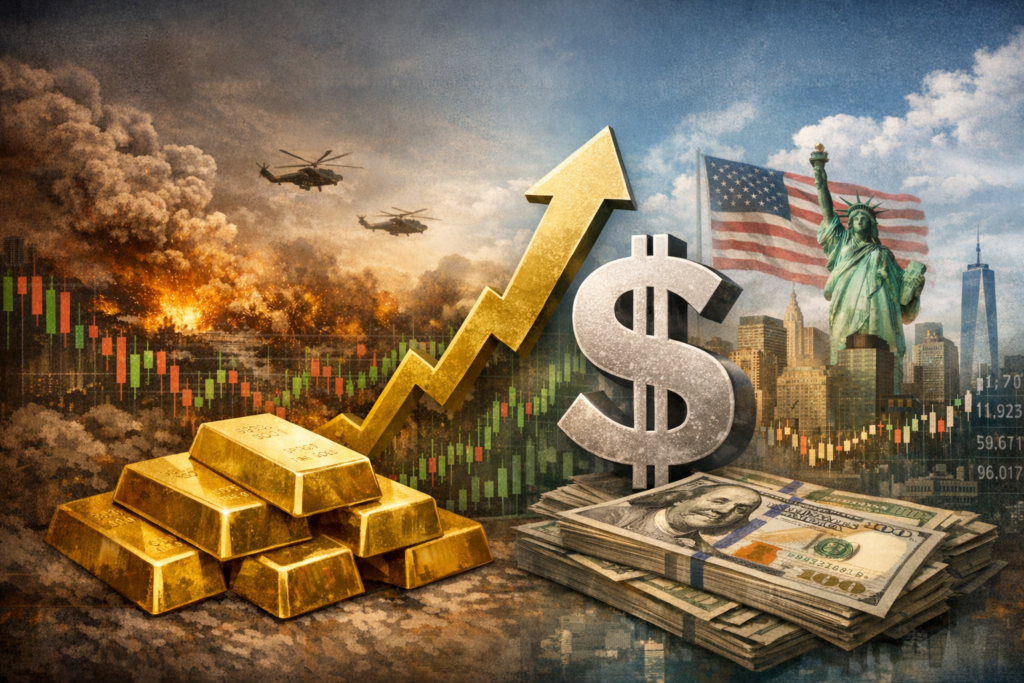
A realistic composite image showing stacked gold bars and a rising golden arrow beside a metallic dollar symbol and bundles of hundred-dollar bills, set against a backdrop of explosions, military helicopters, candlestick charts, the New York skyline, and the Statue of Liberty.

Why Gold and the Dollar Sometimes Rise Together: Understanding the Exception to Their Historical Relationship

The traditional relationship between gold and the dollar is well-established in economic literature: when the dollar strengthens, gold weakens, and vice versa. However, during major crises—wars, financial collapses, or liquidity shocks—we occasionally witness both assets rising simultaneously. Has the rule changed? Or is there a deeper explanation? The “Normal” Relationship Between Gold and the Dollar

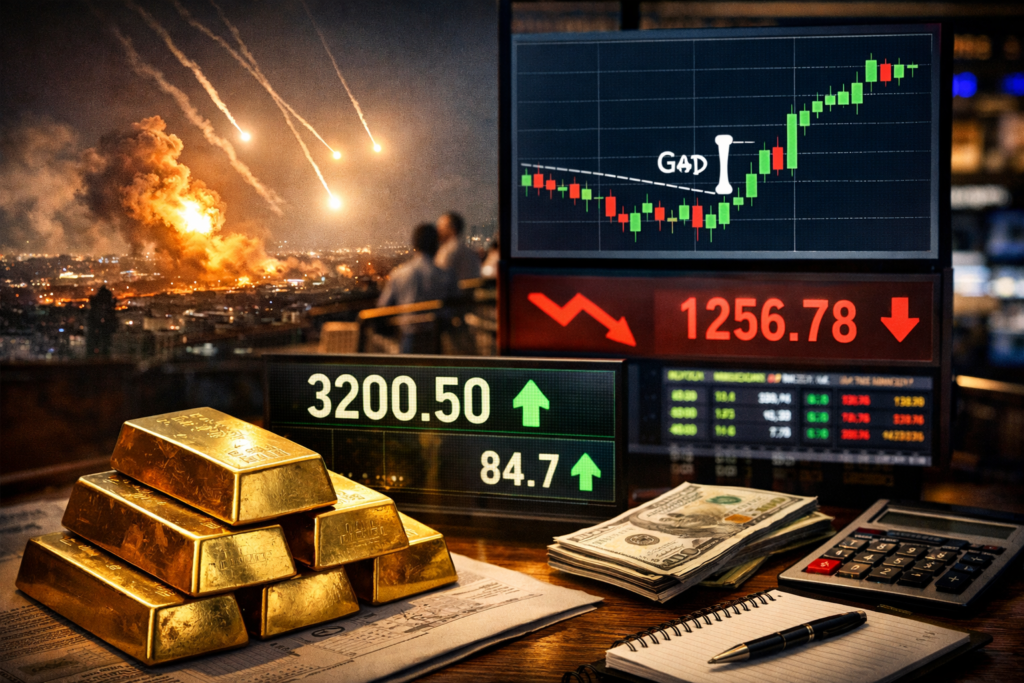
Night scene combining a military strike in the background with financial trading screens showing 3200.50 and 1256.78 alongside gold bars in the foreground

Why Major Military Strikes Often Occur When Markets Are Closed — And How Gold Responds at the Open

When geopolitical shocks unfold, a recurring pattern emerges: the event happens outside primary trading hours, and markets reopen with a price gap rather than gradual movement. This isn’t coincidence. Understanding this dynamic is essential for anyone following gold essentials and how the metal behaves during crisis moments. The Strategic Timing of Major Events Minimizing Immediate Market Chaos When significant

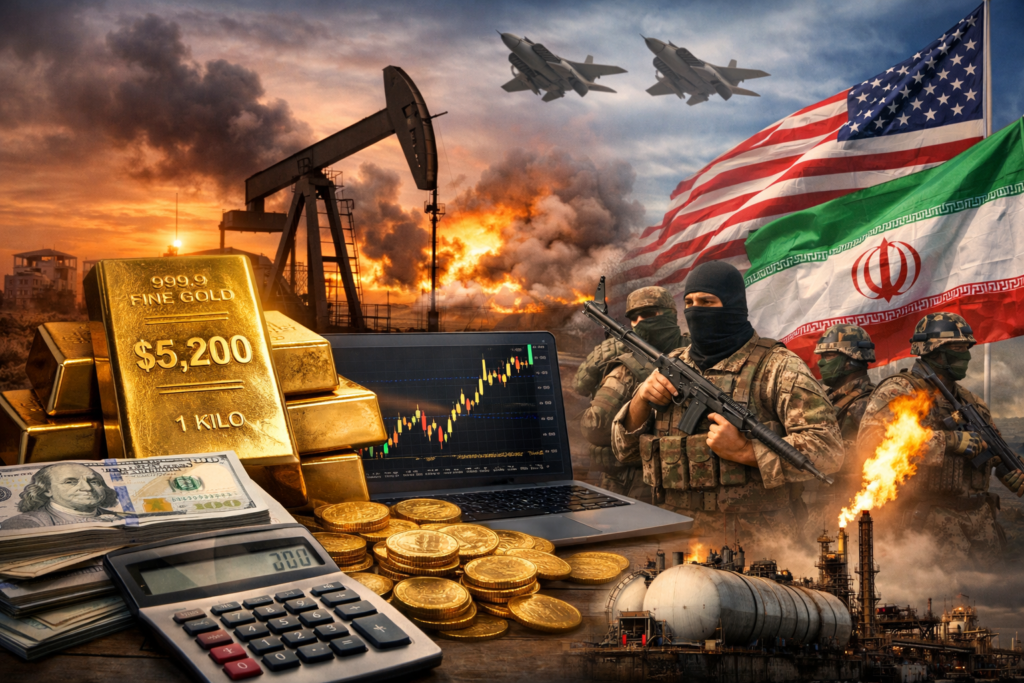
Gold bars marked 5200 beside stacked cash and calculator in the foreground, trading screen showing sharp upward trend, oil facilities burning at sunset, military jets overhead, and armed soldiers positioned before US and Iran flags, illustrating geopolitical tension driving gold surge

Gold Surpasses $5,200 Per Ounce: U.S.-Iran Tensions Restore Risk Premium to Markets

Contextual Overview Gold prices surged past the $5,200 per ounce threshold during today’s spot trading session, driven by escalating tensions between the United States and Iran. The rally emerged amid stalled diplomatic negotiations and official statements suggesting that military options remain under consideration. This movement coincided with declining equity indices and rising oil prices—a clear indication that

Scroll to Top