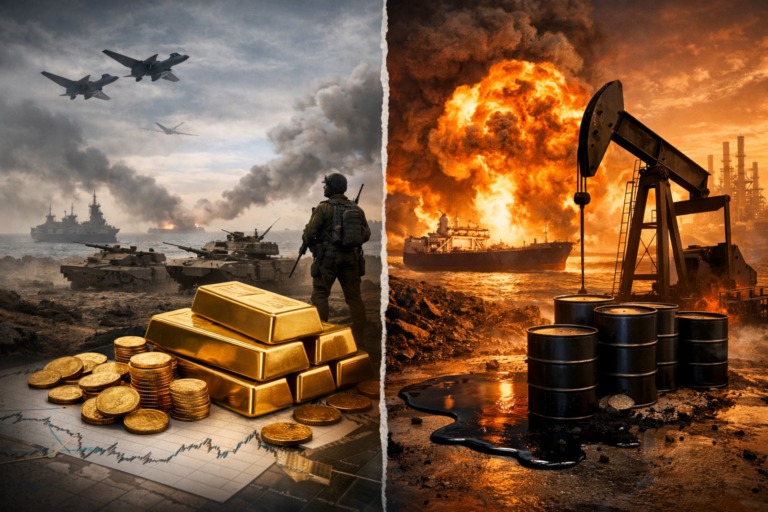
In the complex world of commodity markets, understanding the difference between geopolitical tension and actual warfare proves essential for anyone following precious metals. While both scenarios generate alarming headlines, market responses to each phase differ dramatically.
This distinction matters because gold often surges during uncertainty phases, while energy markets may capture most attention when conflicts actually materialize. Recognizing these patterns helps explain seemingly contradictory price movements during global crises.
Defining Geopolitical Tension
Geopolitical tension represents the pre-war phase characterized by escalating threats without direct military engagement. Understanding these dynamics forms part of gold essentials that every informed observer should grasp.
Common Indicators of Rising Tensions
| Indicator Type | Real-World Examples |
|---|---|
| Military threats | Public warnings and ultimatums between nations |
| Economic sanctions | Trade restrictions, asset freezes, banking exclusions |
| Troop movements | Military deployments near contested borders |
| Limited skirmishes | Border incidents without full-scale escalation |
| Trade route threats | Warnings about closing critical shipping lanes |
For instance, recurring tensions between the United States and Iran during various periods never escalated into direct confrontation. However, these episodes proved sufficient to create significant market volatility and drive investors toward safe-haven assets.
How Geopolitical Tensions Affect Gold
During tension phases, what market observers call the “Risk Premium” typically emerges in precious metals pricing.
The Risk Premium Mechanism
Investors begin hedging against worst-case scenarios before they materialize. This defensive positioning creates several observable effects:
- Increased demand for defensive assets including gold and government bonds
- Rising precious metals prices as buying pressure intensifies
- Capital flowing away from risk assets like equities and emerging market currencies
According to Reuters metals market coverage, gold frequently rises during periods of political uncertainty even before any direct military confrontation occurs. This behavior reflects fundamental principles covered extensively in our gold essentials resources.
Why Gold Responds First
Gold’s immediate response to tension stems from its unique characteristics:
| Gold Characteristic | Relevance During Tensions |
|---|---|
| No counterparty risk | Cannot default or be frozen |
| Global recognition | Accepted value worldwide |
| Physical portability | Can be moved across borders |
| Historical precedent | Proven crisis performance |
These qualities explain why sophisticated investors and central banks alike increase gold allocations when geopolitical risks rise. For deeper understanding of these properties, our gold essentials section offers comprehensive coverage.
When Tensions Escalate Into Actual Warfare
Actual warfare represents a fundamental transformation in economic conditions, involving direct military engagement rather than mere threats.
Characteristics of Active Conflict
Active warfare typically includes:
- Direct military strikes affecting infrastructure and production
- International trade disruption as supply chains fragment
- Massive military spending straining government budgets
- Energy supply threats particularly in resource-rich regions
At this stage, markets begin redistributing liquidity across multiple sectors, creating dynamics that differ substantially from the tension phase.
Why Oil Markets Dominate During War Outbreak
When war erupts in energy-producing regions or near major transportation routes, oil becomes the first dramatically affected asset.
Critical Chokepoints
One particularly sensitive passage is the Strait of Hormuz, through which approximately 20% of global oil trade flows daily. Any threat to this waterway creates immediate supply shortage expectations.
| Major Oil Chokepoint | Daily Flow (Million Barrels) | Global Trade Share |
|---|---|---|
| Strait of Hormuz | 21 | 20% |
| Strait of Malacca | 16 | 15% |
| Suez Canal | 5 | 5% |
When these routes face disruption threats, energy market participants purchase oil rapidly, often outpacing gold buying in the immediate aftermath of conflict outbreak.
Gold’s Three-Phase Behavior During Conflicts
Although oil may spike quickly at conflict onset, gold maintains its safe-haven role while moving through three distinct behavioral phases.
Phase-by-Phase Breakdown
| Phase | Timing | Gold Behavior | Primary Market Driver |
|---|---|---|---|
| Phase One | Pre-war tensions | Strong sustained rise | Fear and uncertainty dominate |
| Phase Two | Conflict outbreak | Temporary volatility | Liquidity shifts toward oil |
| Phase Three | Prolonged conflict | Renewed strong climb | Inflation and instability compound |
Phase One: Before War Erupts
During this phase, gold typically rises powerfully as investors fear potential conflict. The uncertainty premium reaches maximum intensity because outcomes remain unknown.
Phase Two: War Begins
Upon conflict outbreak, several factors may create temporary gold volatility:
- Liquidity shifting toward energy markets as oil supply concerns dominate
- Dollar strengthening as global reserve currency demand increases
- Profit-taking by traders who bought during the tension phase
This explains why gold sometimes pauses or even dips slightly when conflicts actually begin, despite seemingly supportive conditions.
Phase Three: Extended Conflict
During prolonged warfare, economic factors return to support gold powerfully:
- Rising inflation from supply disruptions and energy costs
- Expanded government spending on military operations
- Growing public debt requiring eventual monetization
- Declining confidence in economic stability and currencies
Understanding these phases helps explain historical gold price analysis during various conflicts.
Comparative Impact Analysis
| Scenario Type | Oil Market Impact | Gold Market Impact |
|---|---|---|
| Geopolitical tension | Limited initial effect | Clear sustained rise |
| War outbreak | Strong immediate surge | Temporary volatility |
| Prolonged conflict | Remains elevated | Strong renewed climb |
| Post-conflict period | Gradual normalization | Depends on economic damage |
Historical Example: Ukraine Conflict 2022
When war erupted in February 2022, market reactions illustrated these principles clearly.
Oil Market Response
Oil prices surged rapidly amid fears of Russian energy supply disruption. Brent crude jumped from approximately $90 to over $130 per barrel within weeks as European energy security concerns dominated headlines.
Gold Market Response
Gold also rose but experienced greater volatility during initial weeks. Prices reached approximately $2,050 per ounce before pulling back as markets focused primarily on the energy crisis.
Key Observations
| Asset | Pre-War Level | Peak During Conflict | Initial Volatility |
|---|---|---|---|
| Brent Crude | ~$90/barrel | ~$130/barrel | Lower |
| Gold | ~$1,900/oz | ~$2,050/oz | Higher |
This relationship between energy and gold has appeared across multiple historical conflicts. Shocks typically begin in oil markets before effects gradually spread to other asset classes including precious metals.
For those interested in how such events historically influenced precious metals, our gold essentials resources provide deeper historical context.
Practical Framework for Market Observers
Some experienced market observers use a simplified framework for understanding these dynamics:
Tension lifts gold first.
War outbreak lifts oil dramatically.
Prolonged conflict eventually lifts both together.
This framework, while simplified, captures essential market behavior patterns observed across numerous historical episodes.
Additional Considerations
Several factors can modify these general patterns:
| Modifying Factor | Potential Effect |
|---|---|
| Conflict location | Proximity to energy production amplifies oil response |
| Central bank actions | Monetary policy affects gold independently |
| Currency movements | Dollar strength can suppress gold despite tensions |
| Conflict duration | Longer conflicts favor gold accumulation |
Summary and Key Takeaways
The distinction between geopolitical tension and actual warfare proves essential for understanding commodity market behavior during crises.
During uncertainty phases, gold functions as the primary beneficiary due to its historical safe-haven status. Investors seek protection before worst-case scenarios materialize, driving sustained precious metals demand.
When conflicts actually begin, energy markets often capture initial attention and capital flows, particularly when oil supply routes face direct threats. This explains temporary gold volatility at conflict onset.
Extended conflicts ultimately support both asset classes as inflation concerns and economic instability compound over time. Historical patterns suggest patient observers benefit from understanding these multi-phase dynamics.
This framework helps explain why gold prices sometimes pause or fluctuate at conflict onset despite seemingly supportive conditions, and why long-term perspectives often prove rewarding for those who understand market behavior during geopolitical crises.
For deeper exploration of precious metals fundamentals, visit our gold essentials section. Those interested in ongoing market developments may find our gold price analysis coverage valuable.
Additionally, proper care of physical gold holdings remains important regardless of market conditions. Our jewelry care resources offer practical guidance for protecting precious metals investments.
For questions regarding our research methodology or feedback on this content, please visit our contact page. Learn more about us and our commitment to independent, balanced market research. Review our privacy policy to understand how we protect your information.