Introduction: Why China Matters in Global Gold Markets
China operates the world’s largest physical gold market, yet its influence extends far beyond simple supply and demand metrics. The country’s unique regulatory framework, combined with institutional buying patterns and retail investment behavior, creates a distinctive market structure that periodically sends ripples through global gold pricing mechanisms.
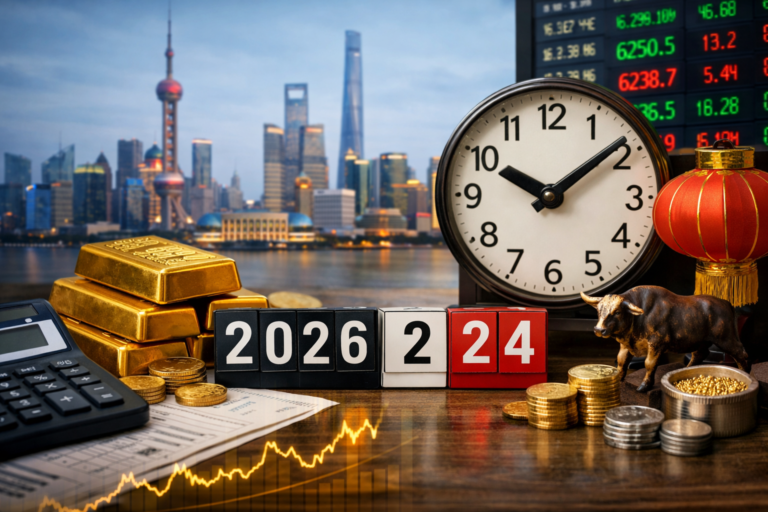
Today, February 24, 2026, marks the reopening of the Shanghai Gold Exchange (SGE) following the extended Lunar New Year holiday a moment that historically coincides with notable market activity.
How the Chinese Gold Market Operates
The Dual-Structure System
China employs a sophisticated two-tier approach combining physical trading with derivatives:
| Exchange | Function | Primary Products | Settlement |
|---|---|---|---|
| Shanghai Gold Exchange (SGE) | Physical gold trading | PAu99.99 (100g contracts) | T+0 cash; T+1 physical delivery |
| Shanghai Futures Exchange (SHFE) | Derivatives & hedging | Gold futures contracts | Standard futures settlement |
The SGE represents the core of China’s physical demand, where actual metal changes hands. The “Shanghai Premium” the price difference between SGE and London spot prices serves as a real-time indicator of domestic demand strength.
Import Regulation: The Hidden Variable
Gold imports into China require specific licenses, typically allocated to authorized banks. This controlled system directly influences local availability and subsequently affects the Shanghai Premium. When domestic demand exceeds available supply, the premium rises, potentially attracting international shipments and creating measurable effects on global gold fundamentals.
Three Forces Driving Chinese Gold Demand
1. Central Bank Acquisitions
The People’s Bank of China (PBoC) continues its strategic accumulation program. According to World Gold Council data, reserves have reached approximately 2,308 tonnes, with consistent monthly additions reinforcing gold’s role as a strategic reserve asset.
2. Retail Investment Appetite
Domestic investors increasingly view gold as a preferred store of value, driven by:
- Capital account restrictions limiting overseas investment
- Ongoing property sector adjustments
- Equity market volatility
3. The Shanghai Premium Signal
A positive premium indicates strong local demand or relative metal scarcity information that influences global trading decisions and shipping patterns.
SGE Holiday Schedule: When Markets Pause
The Chinese gold market observes seven major closure periods annually:
| Holiday | 2026 Dates | Duration |
|---|---|---|
| New Year | January 1–3 | 3 days |
| Lunar New Year | February 15–23 | 9 days |
| Qingming Festival | April 4–6 | 3 days |
| Labor Day | May 1–5 | 5 days |
| Dragon Boat Festival | June 19–21 | 3 days |
| Mid-Autumn Festival | September 25–27 | 3 days |
| National Day | October 1–7 | 7 days |
What Happens When China Reopens?
During Extended Closures
Global markets in London and New York continue operating, but physical demand from the world’s largest consumer temporarily pauses. This absence can create unusual volatility if significant news emerges while Asian markets remain closed.
Post-Holiday Patterns
Today’s reopening typically brings:
- Deferred Demand Recovery: Jewelers and fabricators resume purchasing after the holiday pause
- Premium Adjustments: The Shanghai Premium recalibrates to reflect accumulated demand
- Liquidity Normalization: Asian trading sessions return to full participation
Research from the London Bullion Market Association suggests that SGE premium movements correlate with modest but measurable effects on subsequent global price direction.
The Realistic View: China’s Actual Influence
While China’s role is substantial, it operates within a broader ecosystem. The market responds most notably when:
- Shanghai Premium rises significantly above historical averages
- Institutional or investment buying accelerates visibly
- Import policies or tax structures change
However, the US dollar, Treasury yields, and Federal Reserve policy remain primary drivers. Chinese demand functions as an amplifier strengthening existing trends rather than creating them independently.
For those seeking to understand how various factors interact in precious metals markets, recognizing this distinction proves essential.
Summary
| Aspect | Key Point |
|---|---|
| Market Structure | Dual system combining SGE physical trading with SHFE derivatives |
| Demand Drivers | Central bank buying, retail investment, physical fabrication |
| Holiday Impact | Seven annual closure periods; today marks post-Lunar New Year reopening |
| Global Influence | Significant but amplifying not primary price driver |
| Key Indicator | Shanghai Premium reflects real-time domestic demand conditions |
The Chinese gold market represents a critical component of global precious metals dynamics. Its reopening today after the Lunar New Year holiday introduces renewed physical demand into the international market a factor worth monitoring, though always within the context of broader macroeconomic forces.