
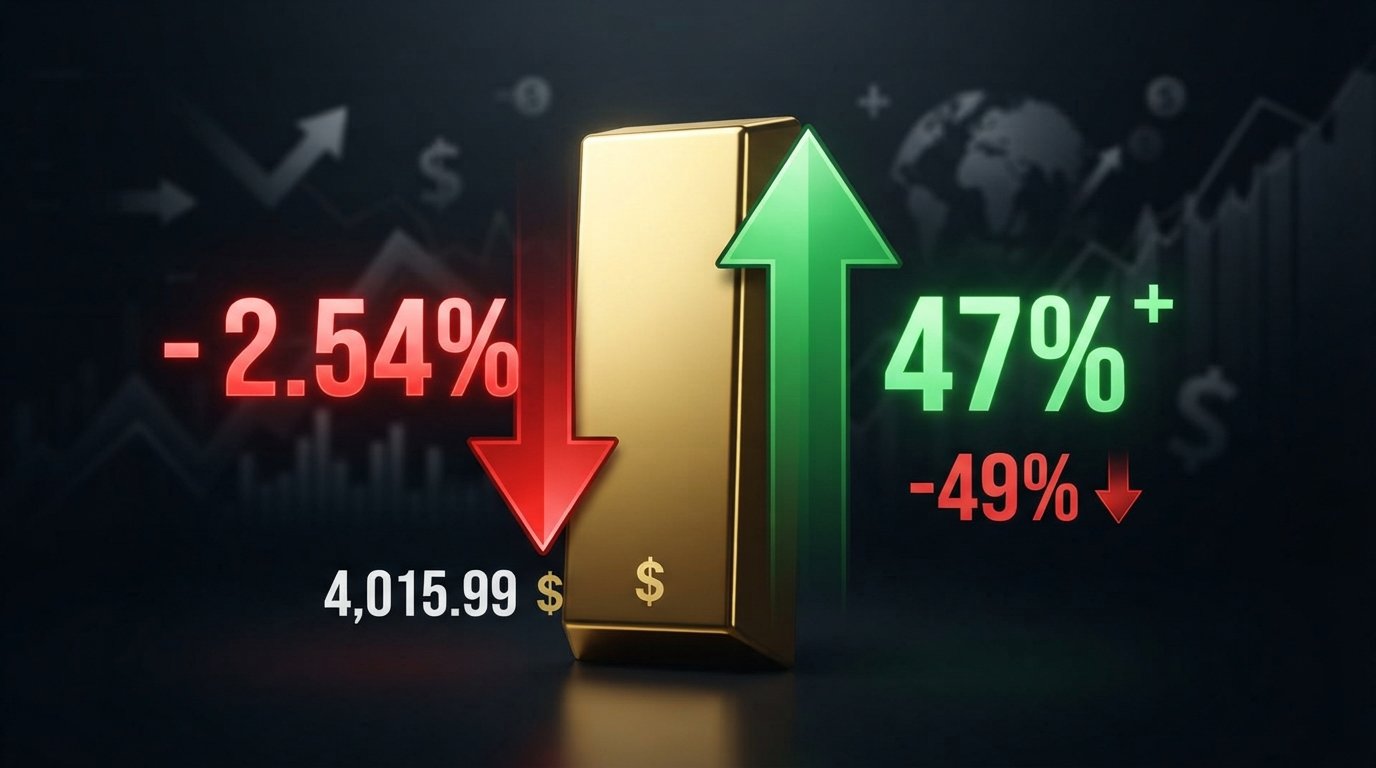
Trading screens today recorded a decline in gold prices by 2.54%, reaching a level of $4,015.99 per ounce. This momentary retreat revives the eternal and legitimate question investors ask at every turn: Is gold truly a safe haven? And why does it sometimes fail expectations and drop during times of financial tension?
To understand this dynamic, experts through historical analysis documented via Investing.com—take us back to the 2008 global financial crisis to dismantle the paradox that caused gold to fall by nearly 30% at the peak of the collapse, before reclaiming its throne.
First: The Journey from the Rally to the “Lehman Brothers” Shock
Between 2001 and 2008, gold experienced a strong upward journey driven by a weak dollar and structural fears, culminating in a historic peak in March 2008. However, as the mortgage crisis worsened and the famous “Lehman Brothers” bank collapsed, the unexpected happened: instead of jumping, gold retreated violently, temporarily losing 30% of its protective value.
This behavior exactly matches what is happening in some current trading sessions, where gold declines despite the presence of economic fears, confusing the calculations of short-term investors.
Second: The Mechanism of Collapse.. “Cash is King” and Margin Calls
The reason behind this decline is not a loss of confidence in gold, but rather lies in a strict financial rule that governs financial markets in times of panic: forced liquidity provision.
Margin Calls
When stock and real estate markets collapse, major investment funds face massive losses that require an immediate injection of cash to cover their exposed positions.
Liquidating the Winner
At that moment, funds find no liquid asset that has retained its value and can be sold immediately other than gold. Gold is sold under compulsion—not because it is a bad asset, but because it is the only winning asset that provides “emergency cash.”
The Supremacy of Cash
At the height of panic, “Cash is King,” and everything temporarily retreats before it due to collective liquidation.
Third: The Reality of Numbers.. The Broader View is the Key
Despite the initial 30% drop, patience and looking at the full picture reframe the truth. Once the initial liquidity shock stabilized and central banks began printing money and launching bailout plans, gold exploded upward.
Investment Asset / Real Performance During the Full 2008 Crisis Cycle
- Gold: +47% (Rocketing growth and a true haven)
- Stocks (S&P 500): -49% (Loss of half the market value)
“Dhbna” Vision for Today’s Levels ($4,015.99)
The current 2.54% decline in gold falls squarely within the normal range of the “risk and liquidity management mechanics” discussed in our previous reports for volatile markets.
Do Not Get Carried Away by Momentary Panic
Daily declines are technical corrections and temporary liquidity pressures, not an annulment of the safe-haven status.
Accumulation Strategy
Historically, periods of decline resulting from liquidity pressure represent the best “strategic entry points” for building long-term positions at supported prices.
Gold is an Asset of Survival
In a world governed by sharp fluctuations, history proves that gold may stumble at the beginning of the battle to provide cash, but it always ends the war in its favor.
Editorial Team at “Dhbna Caliber”
July 13, 2026
Disclaimer: This report is for educational and informational purposes, based on historical analysis, and does not constitute direct investment advice to buy or sell. For more information, please review the privacy policy or visit the homepage.
Leave a Reply