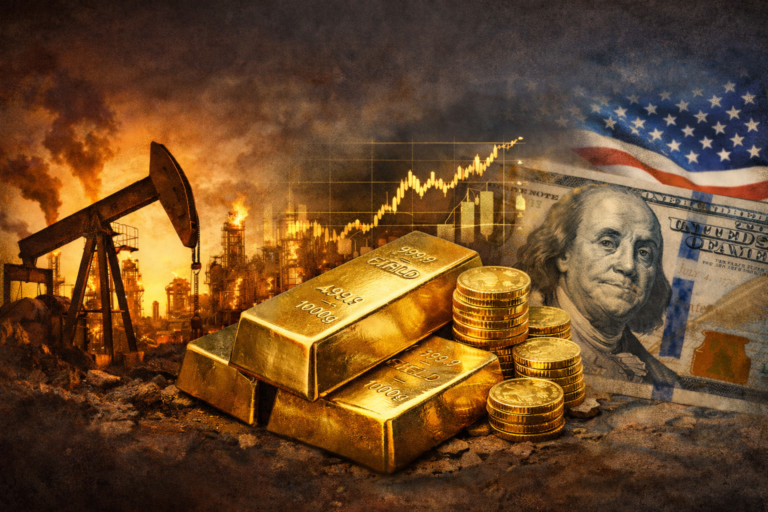
Global markets are currently witnessing a clear repricing of risk as military tensions escalate in the Middle East. This has triggered a simultaneous surge across several key assets: crude oil, the U.S. dollar, and gold.
During recent trading sessions, gold prices climbed to trade near historic levels following a wave of hedging purchases, while oil prices jumped approximately 10–13% within just a few days due to fears of energy supply disruptions, according to Reuters reports.
These movements are not isolated phenomena. Rather, they reflect an interconnected chain of economic factors that begins with energy and ultimately reaches the gold market.
The Energy Shock: Oil Leads the Inflation Wave
The primary catalyst driving market volatility is concern over disrupted oil supplies in the Gulf region. Approximately 20% of global oil trade passes through the Strait of Hormuz, making it one of the world’s most critical energy chokepoints.
With escalating military tensions, oil prices have risen sharply. Some analysts project prices could reach $100 per barrel or higher if the escalation continues.
Economic Consequences of Rising Oil Prices:
| Factor | Impact |
|---|---|
| Transportation & Energy Costs | Significant increase across all sectors |
| Global Commodity Prices | Upward pressure on consumer goods |
| Inflation Rate | Accelerated growth trajectory |
This cycle represents the starting point for how war’s effects transmit to other markets, including those tracking gold price movements.
Dollar Strength: The Flight to Liquidity
During crises, investors gravitate toward the most liquid and secure assets. The U.S. dollar maintains this role thanks to the depth of American financial markets and Treasury securities.
The Dollar Index (DXY) has strengthened during recent sessions as global liquidity flows toward American currency and Treasury bonds amid heightened geopolitical risks.
This pattern recurs historically whenever markets seek safety, particularly given the Federal Reserve’s ongoing role in managing global monetary policy through interest rates and liquidity provisions.
Expected Inflation: The Factor Pushing Gold Back to Center Stage
Rising energy prices typically lead to increased global inflation. Some economists estimate that the current energy shock could add approximately 0.8% to global inflation if it persists over an extended period.
When inflation expectations rise, investors begin searching for assets that preserve purchasing power. This is where gold returns to the spotlight—a principle well understood by those familiar with gold essentials.
How Gold Responds to These Forces
Gold currently moves under the influence of three primary forces:
1. Geopolitical Risks
Military tensions push investors to reduce exposure to risky assets and seek safe havens. Gold has historically served as one of the most important such assets, typically rising during periods of war or political instability.
2. Elevated Inflation
Gold serves as a traditional hedge against inflation. As energy and commodity prices rise, gold’s appeal as a value preservation tool increases correspondingly.
3. Dollar Strength
Under normal circumstances, a rising dollar pressures gold since the metal is priced globally in dollars. However, during major crises, both may rise simultaneously due to increased demand for safe assets.
Why Gold and Dollar Sometimes Rise Together
During significant crises, what’s known as “Safe Haven Demand” emerges:
| Asset | Role During Crisis |
|---|---|
| U.S. Dollar | Immediate global liquidity |
| Gold | Long-term value store and hedge |
Capital may flow into both simultaneously, despite their traditionally inverse relationship.
What Markets Are Watching
Several factors will determine gold’s direction in coming days:
- Developments in the Middle East conflict
- Global oil price movements
- U.S. Treasury bond yields
- Any Federal Reserve signals regarding inflation and monetary policy
For those interested in understanding how these factors affect precious metals, our resources on jewelry care also provide valuable insights for gold owners.
Summary
Gold’s current rise isn’t an isolated technical movement but rather the result of three major economic forces interacting:
- Energy shock stemming from conflict
- Rising inflation expectations affecting global purchasing power
- Liquidity flows toward the dollar creating market tension
This combination creates an environment supporting gold in the near term, though dollar strength makes daily movements more volatile.
In such periods, markets don’t move on a single factor alone, but through complex interaction between energy, liquidity, and inflation—the forces repricing gold globally today.