How Trump’s Statements Triggered a Complex Market Reaction
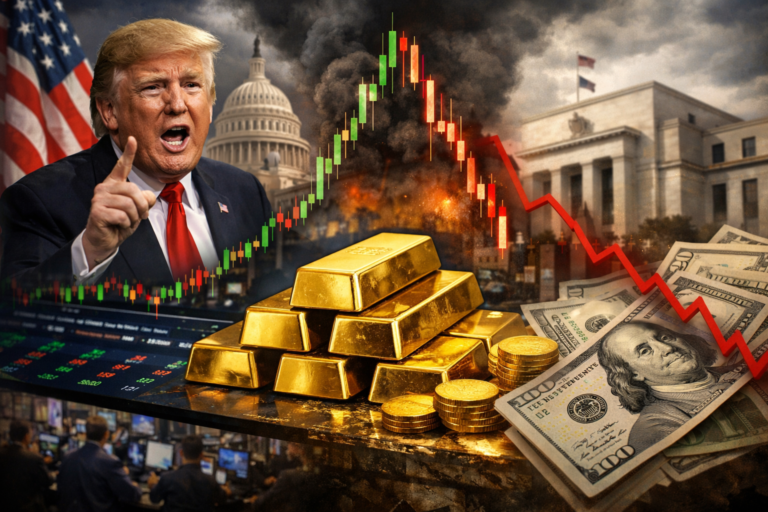
The gold market experienced significant turbulence during the March 23, 2026 session, following statements from former U.S. President Donald Trump that carried tones of political and economic escalation. These remarks revived concerns about potential trade tariffs and unconventional economic policies.
While such developments typically support gold as a safe-haven asset, the market’s response proved far more nuanced. The yellow metal initially surged before retreating sharply within the same session—a pattern reflecting the complex dynamics currently governing global markets.
The Political Catalyst: Uncertainty Returns
Trump’s statements regarding potential tariff reimposition brought back memories of previous trade wars that disrupted global commerce. This type of news elevates what financial literature terms the “Risk Premium”, typically prompting investors to:
- Reduce exposure to risky assets
- Increase demand for safe-haven instruments
However, the effect this time was far from straightforward.
The Initial Surge and Swift Reversal
In the minutes following the news, some capital flows moved toward gold, pushing prices higher rapidly. Yet this rally proved short-lived. A subsequent selling wave drove gold lower, reflecting large liquidity entering and exiting within a compressed timeframe.
This pattern—quick rise followed by decline—typically indicates:
| Phase | Market Behavior |
|---|---|
| First Movement | Short covering by traders closing bearish positions |
| Second Movement | Swift profit-taking by institutional funds |
Understanding these gold essentials helps explain why prices can reverse direction within hours.
Institutional Liquidity and Portfolio Repositioning
The March 23 movements cannot be explained by news alone. They must be understood within the context of portfolio rebalancing by major market participants.
During such events:
- Large funds enter quickly to capitalize on volatility
- They redistribute positions as expectations shift throughout the session
This behavior reflects a market environment dominated by:
- Algorithmic trading executing in milliseconds
- Short-term strategies prioritizing quick gains
- News-sensitive liquidity reacting to headlines instantly
The Dollar as Primary Refuge
Alongside political tension, the U.S. dollar attracted notable demand as a liquidity haven. Here emerges one of the market’s most important paradoxes:
| Asset | Role |
|---|---|
| Gold | Long-term safe haven |
| Dollar | Immediate liquidity refuge |
During shock moments:
Liquidity tends to flow toward the dollar first, creating direct pressure on gold prices. This dynamic contributed significantly to converting the initial rally into a retreat.
Monetary Policy Background Amplifying Volatility
These movements occurred while markets remained under the influence of the Federal Reserve’s cautious stance following its March 2026 meeting, which signaled:
- Postponement of rate cuts
- Continued inflation concerns
This backdrop made markets hypersensitive to any new development. Any political shock meant amplified price movements, while any shift in expectations triggered immediate repricing—a reality that those following gold price movements have witnessed repeatedly.
Why the Market Appeared “Random”
The March 23 action reflects a market environment where multiple powerful forces intersect simultaneously:
| Factor | Effect on Gold |
|---|---|
| Federal Reserve Policy | Downward pressure |
| Political Tensions | Upward support |
| Dollar Strength | Direct pressure |
| Oil and Inflation | Indirect pressure |
When these forces conflict, the market loses clear direction, producing choppy, fragmented price action.
A Behavioral Reading of Market Dynamics
What occurred during this session reflects a deeper transformation in trading nature:
- Markets have become news-driven rather than trend-driven
- Liquidity transfer speed has increased dramatically
- The gap between initial reaction and final pricing has widened
In other words, trends no longer build gradually. Instead, they form through successive waves of rapid reactions.
For those interested in understanding how these dynamics affect physical gold and jewelry care, such volatility often creates opportunities for strategic purchases.
Summary
| Element | Impact |
|---|---|
| Trigger | Trump’s political statements |
| Initial Response | Gold rally on safe-haven demand |
| Secondary Response | Dollar strength reversed gains |
| Background Factor | Fed’s hawkish March stance |
| Result | Net decline after initial surge |
The gold volatility witnessed on March 23, 2026 was not the result of a single headline. It emerged from complex interactions between sudden political statements, institutional liquidity movements, dollar strength, and a restrictive monetary backdrop.
In this context, liquidity and the dollar overpowered the safe-haven effect, leading gold to retreat after its initial rally.