The most frustrating experience for any gold observer is watching prices move day after day without understanding why they moved at all.
Markets don’t reward those who chase the last digit on the screen. They reward those who understand the forces that produced that digit in the first place.
And this is precisely why reading gold doesn’t begin with gold itself.
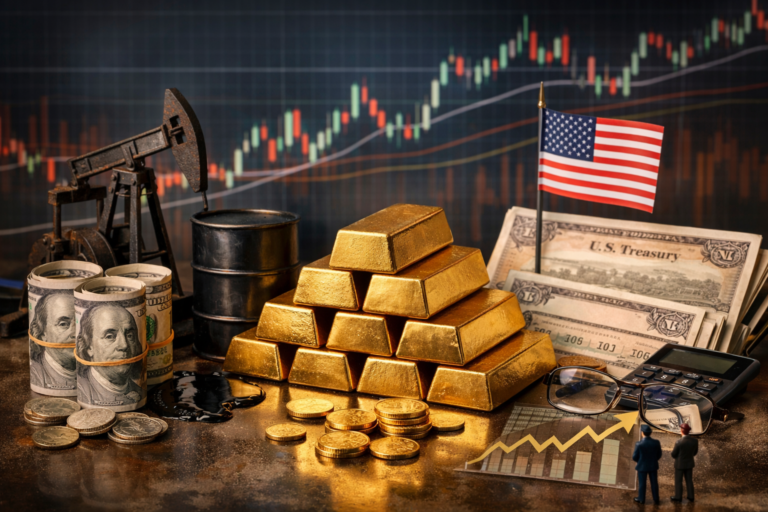
The price, more often than not, is merely the final echo of shifts that occurred earlier — in oil markets, in the dollar, and in U.S. Treasury yields.
These aren’t peripheral indicators. They are, in essence, the language through which gold expresses itself.
Gold Doesn’t Move Alone — It Gets Repriced Continuously
When gold rises or falls, the most important question isn’t:
“What’s the price?”
It’s:
“What changed in the financial environment to cause this movement?”
Did it rise because geopolitical risks escalated? Or because the dollar lost momentum? Or because markets began repricing the Federal Reserve’s interest rate path? Or because yields dropped, reviving appetite for non-yielding assets?
Every time gold moves, another market has already started speaking.
This is why following gold in isolation from its core drivers is like reading a scoreboard without watching the match.
First: Oil — When Energy Becomes a Fear and Inflation Gauge
Under normal circumstances, oil may seem distant from gold. But during periods of tension, it becomes one of the most sensitive indicators affecting it.
Oil doesn’t just reflect the energy market — it signals something far broader:
- Production costs
- Transportation costs
- Price pressures
- Market assessment of expanding risks
Oil as a Risk Signal
When oil rises due to war, supply threats, Middle East tensions, or shipping route disruptions, markets don’t just see a rising barrel price — they see potential systemic disruption.
In such moments, gold gains its traditional support as a safe-haven asset.
Oil as an Inflation Signal
But as the rally persists, markets begin asking a deeper question:
Does higher oil mean stickier inflation for longer?
Here, oil can shift from supporting gold to pressuring it — if investors believe the Fed will struggle to cut rates.
The pattern becomes clear:
Oil may lift gold first through fear… then pressure it later through interest rate expectations.
Second: The Dollar — Gold’s Direct Counterweight
If there’s one variable with the most direct relationship to gold, it’s the U.S. dollar.
Gold is priced globally in dollars, meaning any change in dollar strength reflects almost immediately on the precious metal.
The classic rule is well-known:
- Stronger dollar → Pressure on gold
- Weaker dollar → Support for gold
When the dollar rises, gold becomes more expensive for buyers outside the United States, relatively weakening global demand. When the dollar falls, gold becomes more attractive from a pricing perspective.
Why Do Gold and Dollar Sometimes Rise Together?
During deep uncertainty, markets don’t always follow the “inverse relationship.”
Sometimes investors buy both the dollar and gold simultaneously — and this isn’t contradictory:
- The dollar is bought for global liquidity
- Gold is bought for protection against extended uncertainty
This distinction reveals what type of fear exists in the market: liquidity fear, systemic fear, or both.
Third: Bond Yields — The “Cost of Holding Gold” Indicator
If oil explains inflation, and the dollar explains liquidity, then U.S. Treasury yields explain a more fundamental question:
Why would an investor hold gold at all?
Gold is an asset that provides:
- No coupon
- No interest
- No periodic yield
When Treasury yields rise, so does what markets call the opportunity cost.
Investors begin comparing: Why hold a non-yielding asset when I can get relatively high returns from U.S. Treasuries?
This creates one of the market’s most established relationships:
Rising yields pressure gold — especially the 10-year Treasury yield.
Rising yields typically signal either:
- Higher rates for longer
- Or stickier inflation
Both scenarios make gold’s environment more challenging.
When yields decline, it often signals easing monetary tightness or rising rate-cut expectations — and gold usually begins recovering momentum.
Why Reading Each Indicator Alone Isn’t Enough
The most common mistake in following gold is viewing each variable as operating independently.
But gold doesn’t move based on “one cause” — it moves based on a balance of multiple causes.
| Environment Type | Conditions | Gold Outlook |
|---|---|---|
| Pressuring | Rising oil + Strong dollar + High yields | Challenging — higher inflation expectations, higher rates, stronger dollar assets |
| Supportive | Rising oil (geopolitical) + Weak dollar + Falling yields | Favorable — higher risks, less rate pressure, return of hedging demand |
This is why proper gold reading resembles understanding a system, not tracking a number.
Summary: Gold Speaks Through Other Markets First
Reading gold maturely requires more than knowing where the price closed or how much it moved during a session.
The real question is always:
What drove the market to reprice gold this way?
The three indicators that precede gold’s movement:
| Indicator | What It Measures |
|---|---|
| Oil | Inflation and geopolitical risk |
| Dollar | Liquidity and direct pricing pressure |
| Bond Yields | Interest rates and opportunity cost |
Gold itself is ultimately the final result of this entire interaction.
Those who watch gold alone see the movement.
Those who watch oil, the dollar, and yields alongside it begin to understand the meaning.
The Golden Takeaway
Gold doesn’t say everything by itself.
Sometimes, what precedes its movement matters more than the movement itself.