Understanding the Mechanism Behind Trade Policy and Precious Metals
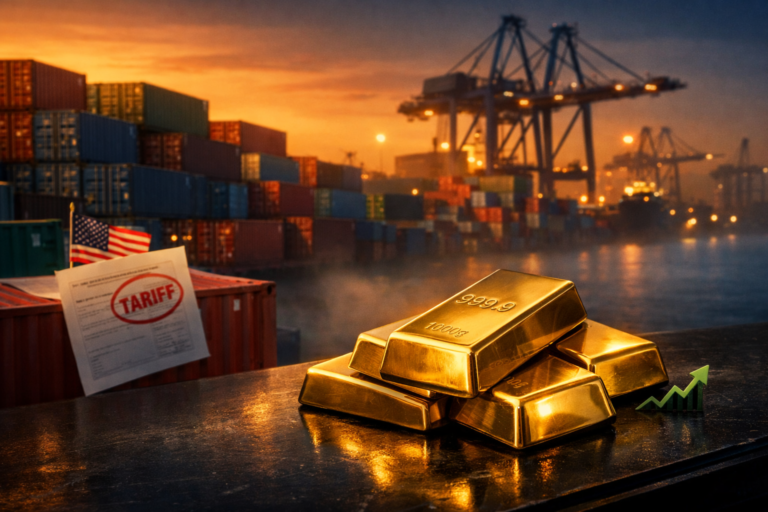
When the United States imposes tariffs on imported goods, the effects ripple far beyond simple trade statistics. These policy decisions fundamentally alter the economic environment in ways that historically influence how investors approach safe-haven assets. Understanding this relationship is essential for anyone seeking to grasp the broader dynamics of gold fundamentals.
What Are Tariffs and Why Do They Matter?
Tariffs are taxes imposed on imported goods, typically serving several strategic objectives:
| Objective | Mechanism | Economic Impact |
|---|---|---|
| Protect domestic industries | Raise import costs | Local manufacturers gain competitive advantage |
| Reduce trade deficits | Discourage foreign goods | Shift consumption toward domestic products |
| Political leverage | Economic pressure | Force trade negotiations or concessions |
During the Trump administration, tariffs transformed from conventional economic tools into direct political instruments. Notable examples included:
- 25% tariffs on hundreds of billions in Chinese imports
- Duties on steel and aluminum from the European Union
- Measures against Canada and Mexico under “national security” justifications
- Continuous threats of additional tariffs to extract trade concessions
These policies collectively created what observers described as a global trade war.
The Three Channels Connecting Tariffs to Gold
Tariffs don’t affect gold directly. Instead, they reshape the fundamental factors that drive precious metal demand.
Channel One: Inflation Pressure
When import costs rise, businesses pass these expenses to consumers. This creates inflationary pressure throughout the economy. Historically, gold attracts heightened interest during inflationary periods as investors seek protection against purchasing power erosion.
Channel Two: Economic Growth Concerns
Trade restrictions typically produce:
- Declining global trade volumes
- Supply chain disruptions
- Slower economic growth
Such environments encourage market caution and increase demand for assets perceived as safer stores of value.
Channel Three: Policy Uncertainty
Unpredictable trade decisions create:
- Elevated economic ambiguity
- Reduced investor confidence
- Lower appetite for high-risk assets
Under these conditions, gold historically emerges as a preferred allocation for institutions and individual investors alike.
Why This Period Proved Particularly Impactful
Unpredictable Decision-Making
The era featured surprise announcements and rapid policy reversals, elevating the “shock factor” in markets and weakening forecasting capabilities.
Expanded Financial Leverage
Beyond tariffs, tools like sanctions and trade pressure prompted several nations to:
- Reduce dollar dependency
- Increase central bank gold reserves
This behavior reinforced gold’s role as a long-term strategic asset.
Coinciding Fiscal Pressures
The period witnessed:
- Expanded fiscal deficits
- Rising U.S. debt levels
The combination of trade tensions with fiscal concerns heightened anxiety about financial system stability—a factor that historically supports gold.
International Legal Perspective
The World Trade Organization examined these policies and found that:
- Several tariffs violated international trade rules
- The broad use of “national security” justifications was questionable
- Unilateral measures without full arbitration processes were problematic
However, the WTO’s appellate mechanism became paralyzed, and some rulings remained unenforced—creating a gap between legal objection and political reality.
If you have questions about how such policies affect precious metals, feel free to reach out to us for clarification.
Summary
| Factor | Effect on Environment | Historical Gold Response |
|---|---|---|
| Higher tariffs | Increased inflation | Enhanced safe-haven appeal |
| Trade restrictions | Slower growth | Greater defensive positioning |
| Policy unpredictability | Elevated uncertainty | Institutional accumulation |
| Central bank diversification | Reduced dollar reliance | Strategic reserve building |
Tariffs represent a pressing force on global trade and a source of inflation and uncertainty. These factors don’t impact gold directly but reshape the economic and financial environment in ways that often enhance gold’s role as a hedging and strategic asset.
At Dhbna, we don’t examine events in isolation—we read the context and explain how effects develop over the broader horizon. For more insights into how global events shape precious metals, explore our gold essentials section.