By: Dhbna Research Desk
With gold prices rallying from ~$3,000/oz in early 2025 to over $4,200 in 2026, a critical economic and spiritual question arises: Does inflation erode the real value of Zakat given to the poor? Or does Gold restore the balance?
To answer this, we must look beyond the “Monetary Illusion” and analyze the purchasing power dynamics.
1. The Problem: Zakat in a Fiat Currency World
If a wealthy individual holds their savings in cash (fiat currency), inflation eats away at its value. $100 today buys less bread than it did a year ago.
- The Risk: If Zakat is paid on stagnant cash, the purchasing power transferred to the poor decreases. The poor receive paper money that has lost its strength.
2. The Divine Solution: The Gold Standard
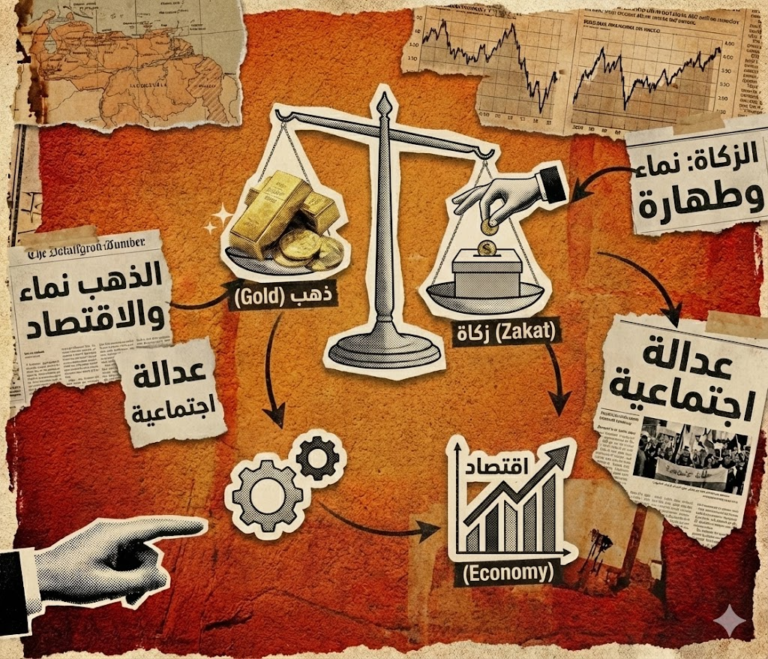
Islamic Sharia linked the Nisab (the minimum threshold for Zakat) to Gold (85g) and Silver. This is economic genius. Gold is the ultimate inflation hedge. When the cost of living rises, Gold prices typically rise in tandem (or faster), meaning the monetary value of Zakat automatically increases.
3. The Math: 2025 vs. 2026 Scenario
Let’s calculate the impact based on real market movements:
- Portfolio: An individual owns savings equivalent to 100 grams of pure gold.
Case A: In 2025 (Last Year)
- Gold Price: ~$3,000 / oz.
- Value of 100g Wealth: ~$9,650.
- Zakat Paid (2.5%): $241.25. (This amount purchased a specific basket of goods).
Case B: In 2026 (Current Year)
- Gold Price: ~$4,200 / oz (approx. 40% increase).
- Value of 100g Wealth: ~$13,500.
- Zakat Paid (2.5%): $337.50.
4. The Verdict: Who Wins?
The Zakat payout increased from $241 to $337—a 40% jump.
- Did the inflation of basic food/goods rise by 40%? Likely not (global CPI is often lower).
- Conclusion: The Purchasing Power of the Zakat received by the poor actually increased.
Because the wealth was pegged to Gold, the rise in asset price compensated for (and exceeded) the inflation rate. If Zakat were pegged to depreciating paper currency, the poor would have suffered. By linking it to Gold, Sharia ensures that the “Poor’s Right” adjusts dynamically to the cost of living.
Dhbna Conclusion
Inflation does not “eat” Zakat if the underlying wealth is preserved in Gold. The Islamic financial system has a built-in “Auto-Correction” mechanism. The surge in gold prices is not just a trading opportunity; it is a safeguard ensuring that the funds reaching the needy today are strong enough to combat the rising prices of tomorrow.